Paavo Sattler
Statistical Methodology for Complex Data and Structured Inference
TU Dortmund University
RWTH Aachen University
My research develops statistical methodology for complex multivariate and high-dimensional data, with particular interests in nonparametric inference, structured and directional hypotheses, multiple testing, and resampling-based methods. I am especially interested in the mathematical structures behind statistical procedures and in turning methodological ideas into practical tools and software.

Research Interests
Multivariate & High-Dimensional Inference
Inference for complex multivariate settings, repeated-measures designs, covariance and correlation structures, and high-dimensional data.
Nonparametric & Resampling-Based Inference
Methods based on comparatively weak distributional assumptions, including bootstrap, permutation, and randomization procedures.
Structured, Multiple & Directional Hypotheses
Inference for structured hypotheses, multiple comparisons, and directional or one-sided alternatives.
Statistical Computing
Efficient implementations and statistical software that turn methodological developments into practical tools.
Current Research
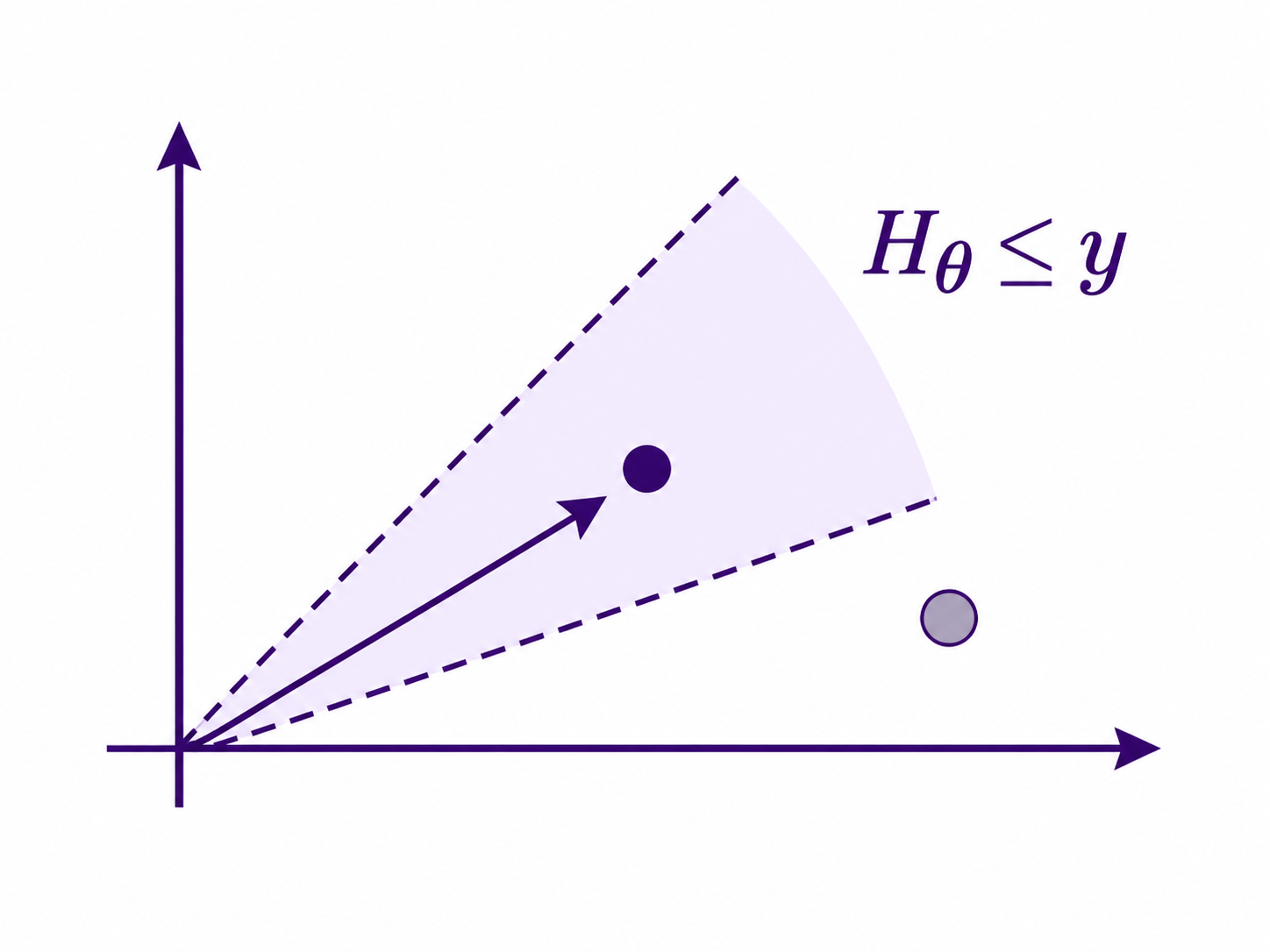
Directional & One-Sided Inference
Methods for directional and superiority hypotheses in multivariate settings, especially when the sign, ordering, or superiority of an effect is scientifically relevant.
DFG-funded project · planned start 2027
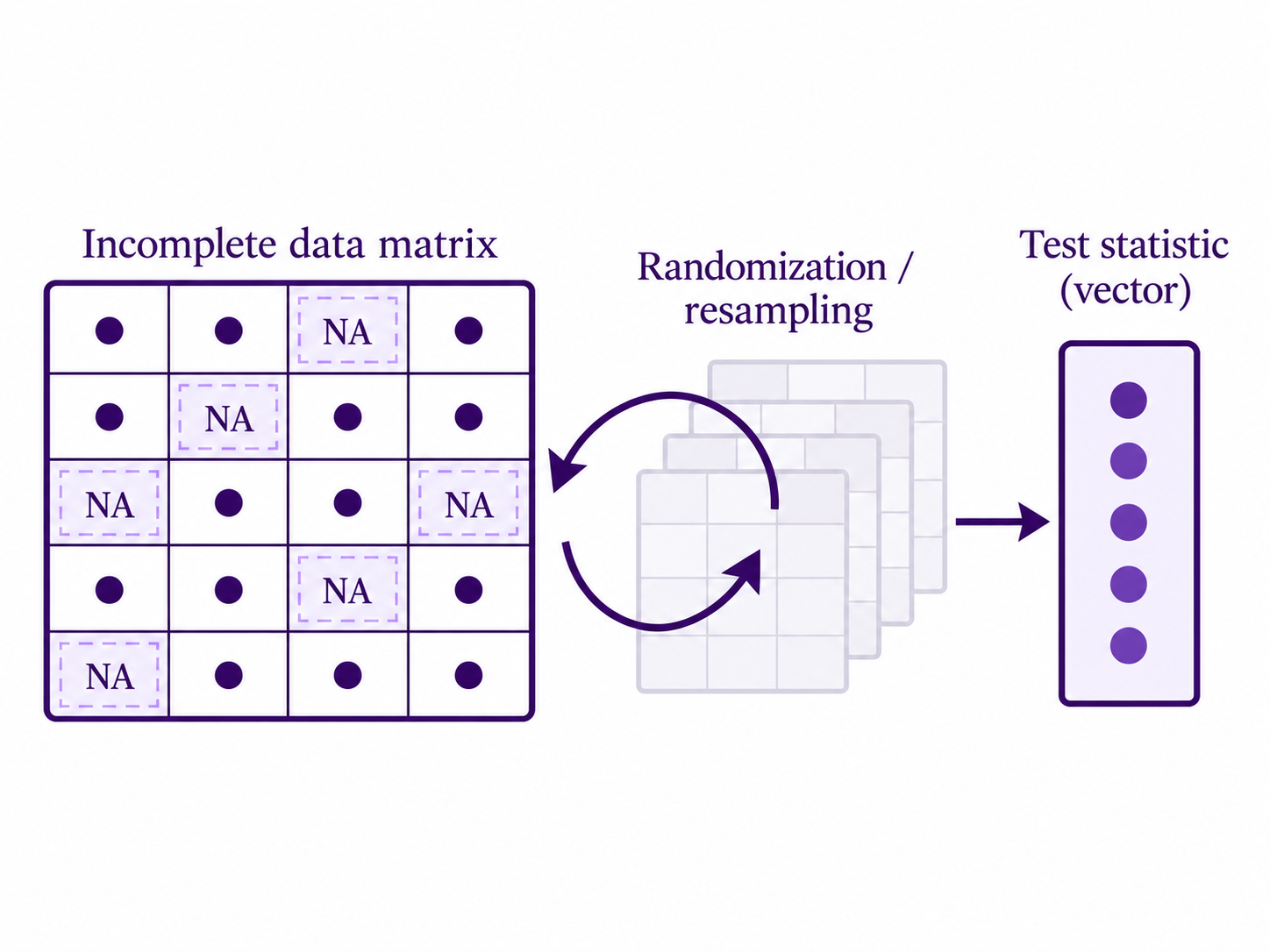
Randomization-Based Inference with Missing Data
Randomization-based inference for relative effects under incomplete observations, including repeated-measures and factorial settings.
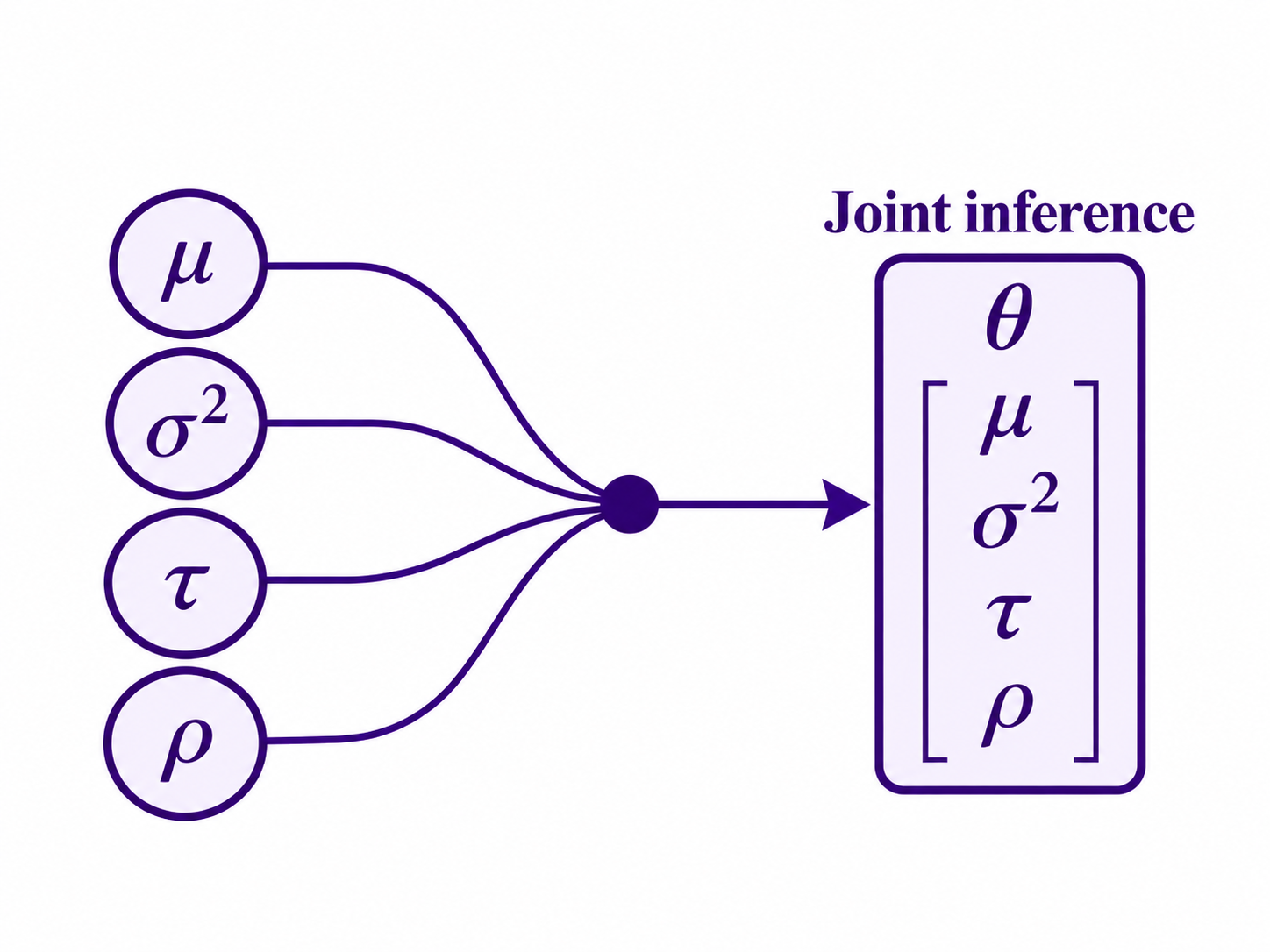
Combined Parameters
Joint inference for parameters that combine different distributional characteristics or effect measures within a common framework.
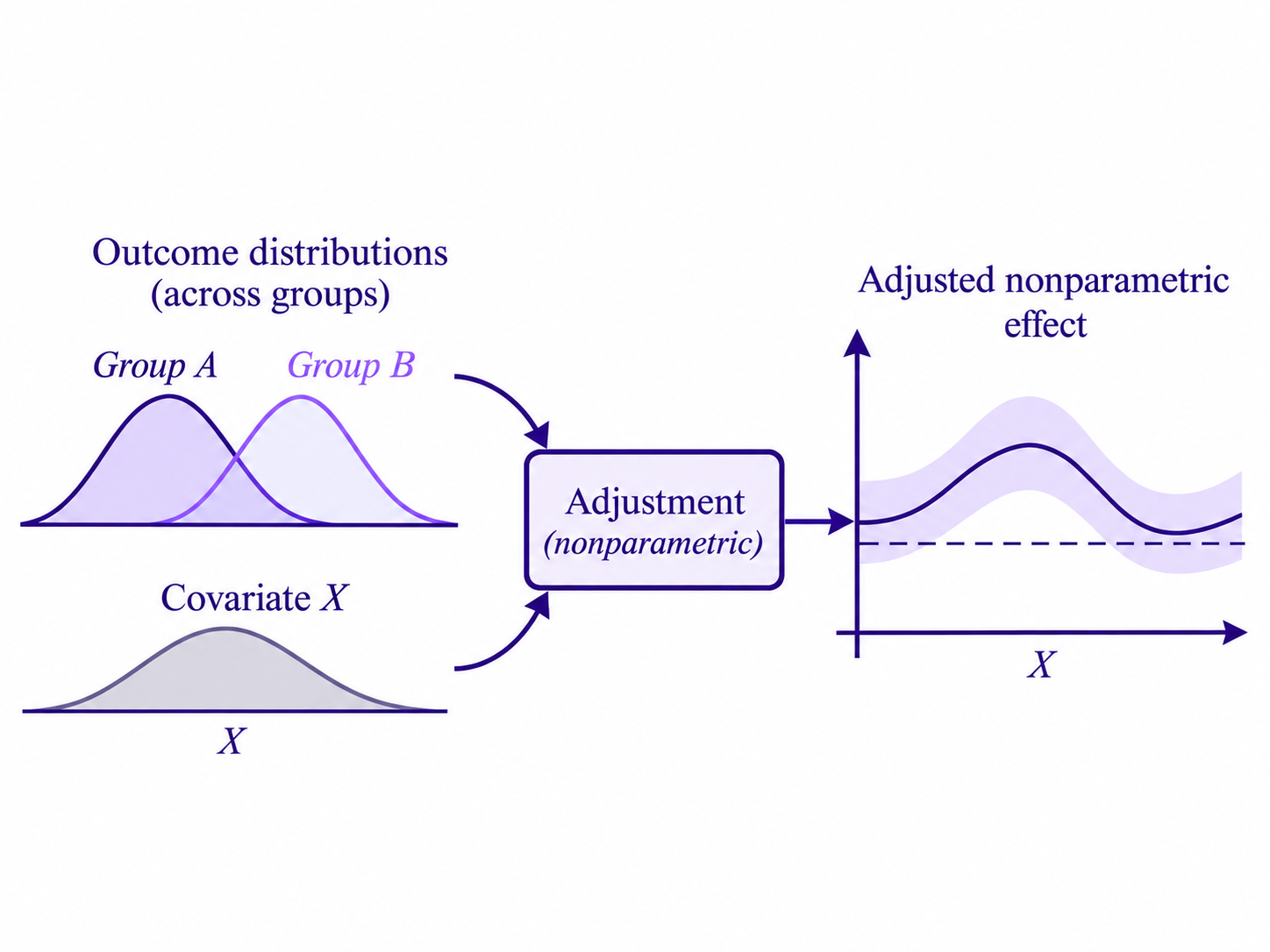
Covariate Adjustment for Nonparametric Effects
Extensions of NANCOVA methodology to covariate-adjusted inference for Mann–Whitney effects in complex designs.
Statistical Software
Software development is an integral part of my methodological research. The packages below provide implementations of statistical methods developed in my work and make them available for practical data analysis.
CovCorTest
Inference for covariance and correlation structures
An R package for testing general hypotheses about covariance and correlation matrices in multivariate designs.
hdrm
High-dimensional repeated-measures inference
An R package implementing methodology for statistical inference in high-dimensional repeated-measures and split-plot designs.
HypoShrink
Simplifying linear hypotheses for efficient inference
Tools for constructing and comparing simplified representations of linear hypotheses in quadratic-form-based inference.
Selected Publications
2026
Quadratic form based multiple contrast tests for comparison of group means
Paavo Sattler, Markus Pauly, Merle Munko
Journal of Statistical Planning and Inference
Develops quadratic-form-based multiple contrast procedures for simultaneous inference on comparisons between group means.
2026
Testing for patterns and structures in covariance and correlation matrices
Paavo Sattler, Dennis Dobler
Journal of Multivariate Analysis
Develops inference procedures for testing structured patterns and restrictions in covariance and correlation matrices.
2025
Choice of the hypothesis matrix for using the Anova-type-statistic
Paavo Sattler, Manuel Rosenbaum
Statistics & Probability Letters
Studies how the choice of hypothesis representation affects ANOVA-type inference and can be used to reduce computational complexity and runtime.
2023
Testing hypotheses about correlation matrices in general MANOVA designs
Paavo Sattler, Markus Pauly
TEST
Provides methodology for testing general hypotheses about correlation matrices in heterogeneous multivariate designs.
2018
Inference for high-dimensional split-plot-designs: A unified approach for small to large numbers of factor levels
Paavo Sattler, Markus Pauly
Electronic Journal of Statistics
Provides a unified framework for inference in high-dimensional split-plot designs across different dimensional regimes.
Teaching & Supervision
Teaching
Selected teaching at Bachelor’s and Master’s level includes Mathematics of Data Science, Nonparametric Statistics, Six Sigma Methods, Introduction to Probability Theory and Statistics, and courses in multivariate statistics and statistical inference.
Supervision
Since 2024, I co-supervise a PhD project on semi- and nonparametric analysis of covariance. I have also supervised Bachelor’s theses on high-dimensional repeated-measures software, one-sided hypotheses, and shrinkage methods.
Research Philosophy
“The most exciting phrase to hear in science, the one that heralds new discoveries, is not ‘Eureka!’ but ‘That’s funny…’”
— Isaac Asimov
For me, research often begins with small observations: an unexpected pattern, a mathematical detail that behaves differently than anticipated, or a question that initially appears almost incidental.
I enjoy understanding these phenomena and following where they lead. Scientific progress does not always arise from a single major breakthrough. Often, it develops through many smaller steps — by gradually understanding mathematical structures, identifying new questions, and building methods around them.
This curiosity about mathematical and statistical phenomena, together with the process of turning theoretical insights into methodology, computation, and practical tools, is a central part of how I approach research.
Collaboration
I am interested in research collaborations that connect statistical methodology with substantive scientific problems, especially where existing methods or software provide a useful starting point for application, adaptation, or further methodological development.